

What agreements should be signed when outsourcing DPO services?
DPO outsourcing is becoming an increasingly popular solution for organizations seeking GDPR compliance without hiring dedicated in-house personnel. However, the success of such an arrangement depends heavily on having the right contractual framework in place. Below are the key agreements that should be considered when outsourcing DPO services.
1. Service Agreement
Why is it necessary?
A service agreement forms the foundation of the relationship between the organization and the external DPO provider. It defines the responsibilities of both parties and establishes the framework for cooperation. The agreement should clearly specify:
- the scope of the DPO's duties and responsibilities, including monitoring GDPR compliance and providing ongoing data protection advice;
- reporting requirements, including the frequency, format, and content of reports;
- financial terms, including payment arrangements and fees for additional services outside the agreed scope.
"Without a well-structured service agreement, organizations expose themselves to uncertainty regarding the scope of the DPO's responsibilities and accountability." – Maciej Kaczmarski, President of the Management Board, ODO 24.
2. Data Processing Agreement (DPA)
Legal basis: Article 28 GDPR
When outsourcing DPO services, a Data Processing Agreement (DPA) may be required whenever personal data is processed by an external party on behalf of the organization. Under GDPR requirements, any organization entrusting personal data processing to a third party should establish a written agreement governing that processing.
What should the agreement include?
- a clear definition of the purposes and scope of data processing;
- requirements for protecting personal data;
- guarantees that appropriate technical and organizational security measures will be implemented;
- obligations to notify the organization promptly of any personal data breaches or security incidents.
According to reports cited in the source material, the absence of an appropriate data processing agreement contributed to a significant proportion of enforcement actions by European data protection authorities.
3. Confidentiality Agreement (NDA)
Why is it important?
A DPO often gains access to highly sensitive information about an organization's operations, security controls, internal processes, and compliance posture. A confidentiality agreement provides an additional layer of protection for:
- business secrets;
- strategic information;
- internal procedures;
- sensitive operational data.
Although confidentiality obligations may already be included in the service agreement, many organizations choose to execute a separate Non-Disclosure Agreement (NDA) for additional legal certainty.
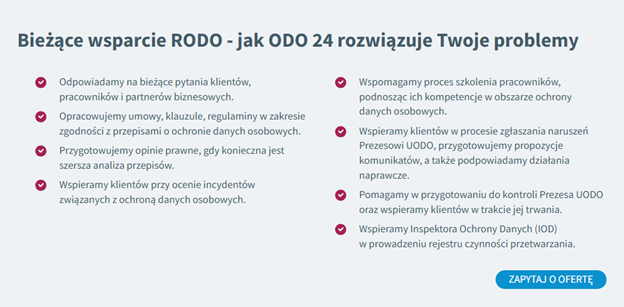
Additional areas to address
Incident response procedures
When outsourcing the DPO function, organizations should define:
- how incidents are reported;
- response timelines;
- responsibilities during a security event;
- communication channels and escalation procedures.
Employee training
External DPOs frequently assist with GDPR awareness training, data protection workshops, employee guidance materials, and compliance education programs. Clearly defining these responsibilities helps ensure consistent GDPR compliance across the organization and supports GDPR implementation and ongoing GDPR support in the company.
The importance of audits and monitoring
Regular audits and ongoing monitoring are critical components of an effective GDPR compliance program. These activities allow the DPO to:
- identify compliance gaps;
- detect emerging risks;
- recommend corrective actions;
- monitor adherence to data protection procedures.
Continuous oversight helps organizations maintain compliance and reduce regulatory risk.
Summary
Organizations outsourcing DPO services should generally ensure that the following agreements are in place:
- Service Agreement – defines responsibilities, deliverables, reporting requirements, and commercial terms;
- Data Processing Agreement (DPA) – governs the processing of personal data where required under GDPR;
- Confidentiality Agreement (NDA) – protects sensitive business and operational information.
Carefully preparing and maintaining these agreements helps minimize legal and compliance risks while enabling the outsourced DPO to effectively support the organization's data protection and GDPR compliance efforts.

