

How to minimize the risk of financial penalties for GDPR violations?
In 2023, supervisory authorities in Poland imposed fines totaling PLN 656,089 for personal data protection violations. Although the total value of penalties was lower than in previous years, increased enforcement activity highlights the growing need for organizations to maintain GDPR compliance. Learn what measures you can implement to effectively protect personal data within your organization and minimize the risk of financial penalties.
1. Understanding the risk
GDPR provides for financial penalties of up to €20 million or 4% of a company's total annual worldwide turnover, whichever amount is higher. In Poland, the highest fine imposed to date amounted to PLN 4,911,732 and was issued against Fortum Marketing and Sales Polska S.A.
2. Regular audits and risk assessments
Conducting regular audits helps identify potential risks and areas of non-compliance with GDPR requirements. Risk assessments make it possible to determine which data processing activities require particular attention.
"Regular audits are the foundation of effective data protection." – Tomasz Ochocki, Vice President of the Management Board, ODO 24.
3. Employee training
Employees should be fully aware of their responsibilities regarding data protection. GDPR training, including e-learning courses (such as those offered by ODO 24), provides essential knowledge in an accessible format.
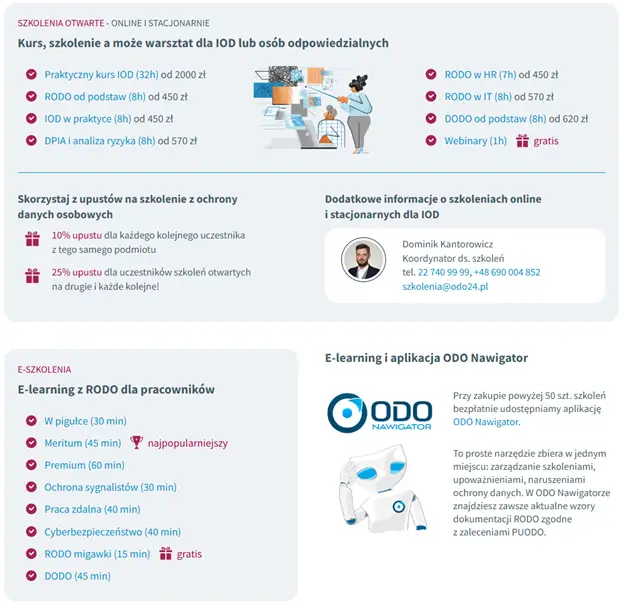
ODO 24 training offerings. Source: www.odo24.pl/szkolenie-rodo
4. Outsourcing the DPO function
Entrusting the role of Data Protection Officer (DPO) to a specialized external provider ensures professional support and reduces the risk of compliance errors.
"DPO outsourcing guarantees GDPR compliance and peace of mind for business owners." – Paweł Radecki, Compliance Expert, ODO 24.
5. Updating documentation and procedures
Documentation related to personal data processing should be continuously reviewed and updated to reflect changes in regulations and industry practices. GDPR implementation is not a one-time project but an ongoing process that requires regular reviews and adjustments.
6. Monitoring and responding to data breaches
The ability to quickly detect and report personal data breaches is critically important. Well-defined incident response procedures help minimize the impact of security incidents and reduce the likelihood of severe penalties.
Summary
Minimizing the risk of GDPR-related penalties requires a proactive approach, including regular audits, employee training, and collaboration with experienced specialists. Investing in appropriate procedures, controls, and tools not only strengthens data protection but also helps safeguard your organization's reputation and long-term compliance.

