
Sounds naive? See what such a message looks like.
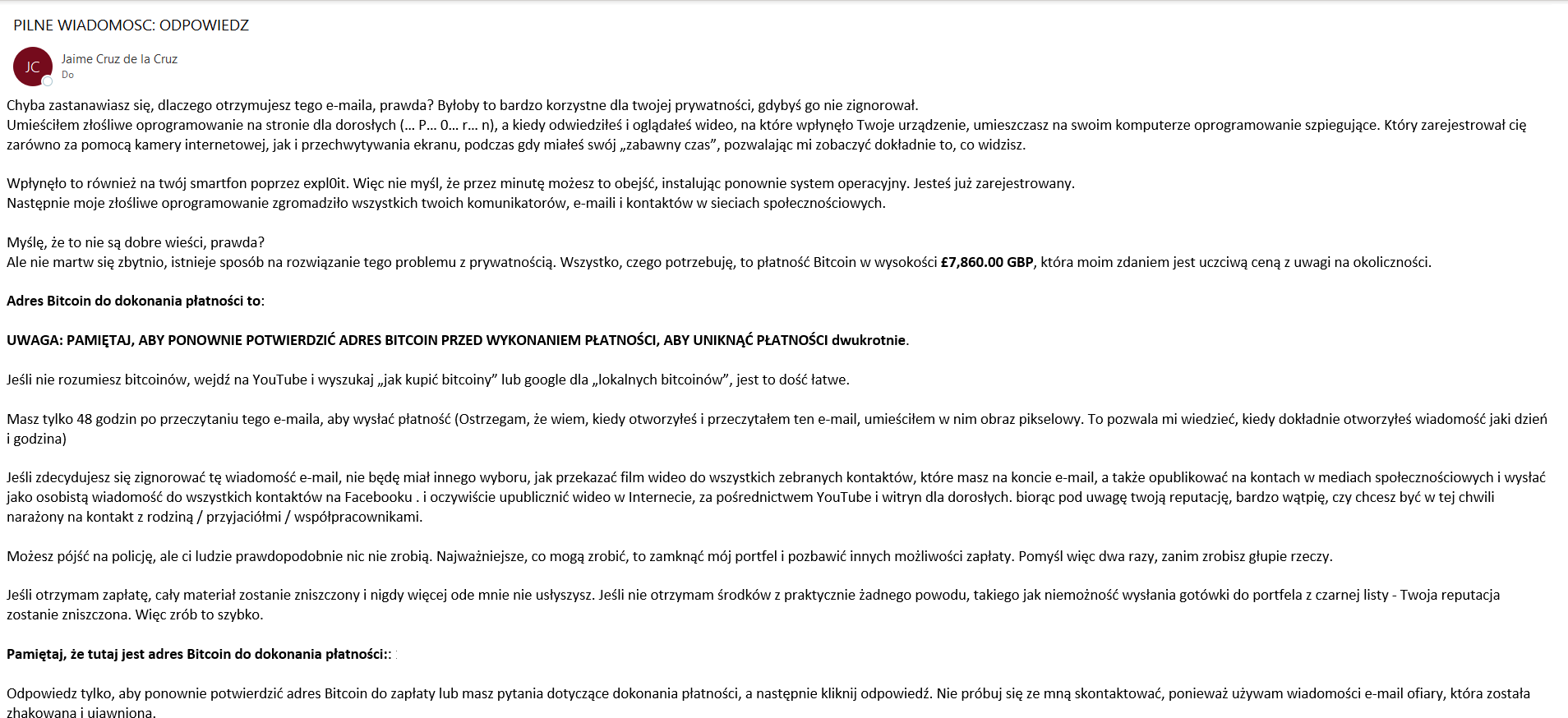
This scam is based on stolen, hacked, or purchased (on the black market or even legally) personal data, primarily contact information (email address, phone number, social media). The scammer then writes to the individuals whose data they have acquired, claiming to have taken control of their personal computer and webcam. As a result, they assert that they were able to film the victim visiting pornographic sites and what they were doing during their browsing.
In reality, the criminal does not know whether you actually have a webcam, whether you visit adult sites, or how you communicate with people – in short: they are guessing. The scammer hopes to trigger people's emotions to "take the bait" and pay a ransom – this is their modus operandi.
How to defend yourself
- As with other phishing attacks, we advise not to respond, but to forward the email to https://incydent.cert.pl/#!/lang=pl.
- If you are considering paying the ransom, you should be aware that this will likely encourage further scams, as the attacker will know they have encountered someone who is susceptible to fraud.
- Do not worry if the message contains your password; it most likely was compromised as a result of previous personal data breaches. You can check if your account has ever been compromised by visiting: https://haveibeenpwned.com/.
- If the message contains a password that you are still using, change it immediately.


